
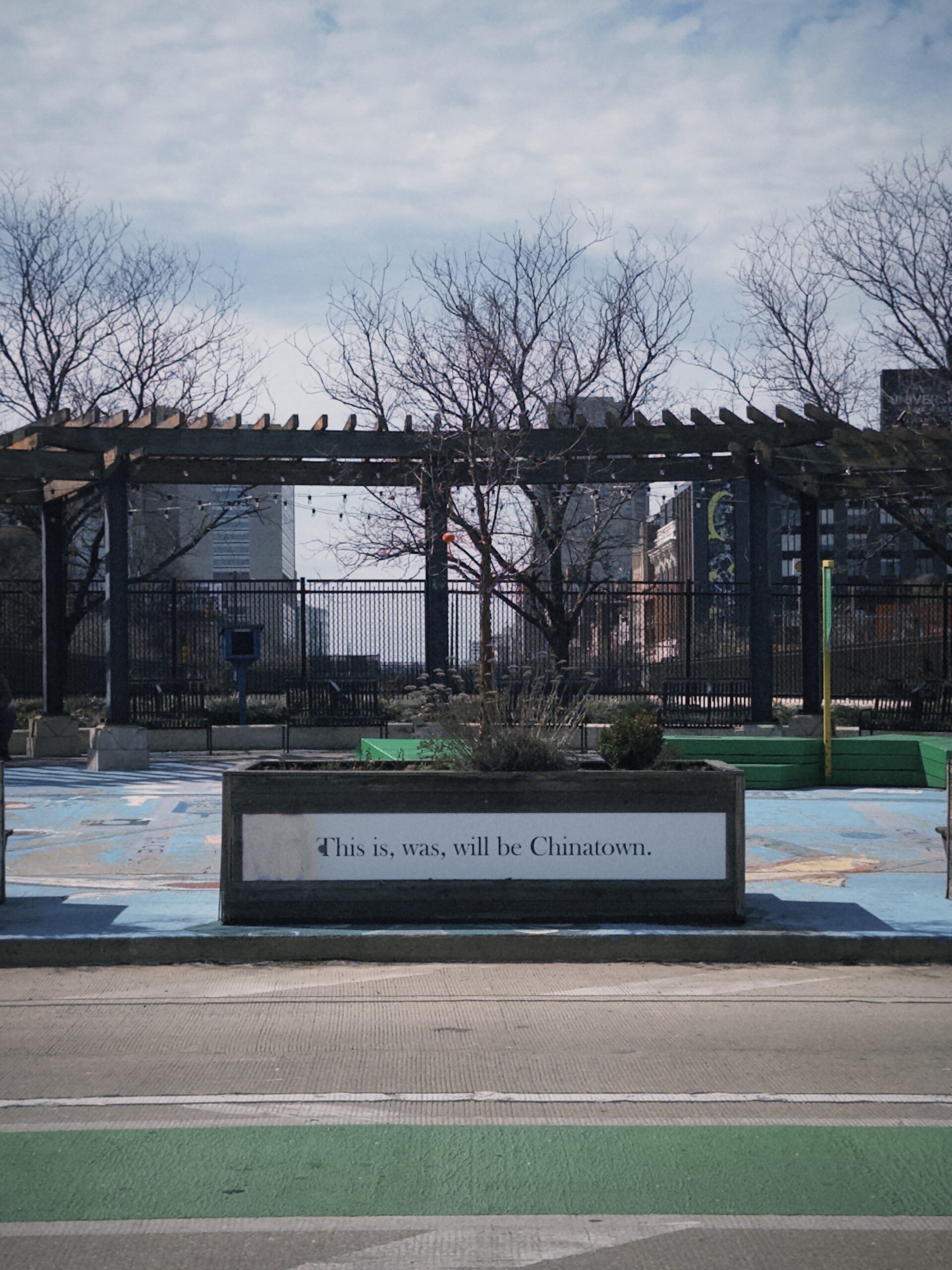
 Julia Kim
Chinatown is not just a place. It is a community that is continuously fighting for its right to exist. Thousands of Chinese Americans call Chinatown home — a sentiment that is extremely important in a land that is over 7,000 miles from where many of them were born. But nothing stays constant with the passage of time, and as more Chinese Americans become Chinese Americans, the integrity of Philadelphia’s Chinatown is called into question. The boundary between globalization and tradition isn’t bold, and the power to draw that line has been and will continue to be in the hands of those who do call Chinatown home.
The grassroots organizations that work hard to maintain Chinatown are invisible to most who cross the Friendship Gate, and many who take a picture with the famous arch have no clue where Tianjin1 is located. I myself wasn’t aware of the forces that work hard to hold up Chinatown—and how heavy that burden must be to carry. In this current political climate, where we are forced to ask whether someone counts as an “American” or not, the ability to uphold your own culture proudly is an incredible feat. Though Chinese Americans are certainly abundant in the United States, they are ultimately a minority. Their total resources are less than their opponents, yet they still do not hesitate to tackle them head on. I feel a great deal of awe when I read about the recent battle against the Philly Sixers arena. The Sixers had the support of the Philadelphia Building and Construction Trades Council which represents over 50 unions in the construction industry. It is all too easy to give up in the face of a bigger adversary, but the people organized and fought for their community. Even when they suffered losses—such as the construction of the Vine Street Expressway—they bounced back with the Chinatown Stitch. It makes me hopeful that this passion cannot be extinguished through oppression or time, and that Chinatown will remain Chinatown for a long time.
But the question of what Chinatown even is is one that I’ve been pondering recently. It is no longer a place just for the Chinese. If you walk down the street, you can see Korean, Japanese, Malaysian, and Indonesian buildings, along with a variety of other cultures. Diversity and inclusion are always good things, but when does it begin to threaten the identity of Chinatown? I believe this can only be answered by those who consider Chinatown a home—an outsider such as I have no true ties to the place. The balance between modernity and tradition is a difficult one that many nations are struggling to find. With the rise of globalization and the proliferation of many Western products along with the fetishization of Asian ones, there is often a priority for accumulating profit rather than preserving culture. I remember clearly seeing the construction in front of the History of Chinatown mural. I wonder how it will be remembered, if only the top is visible. Seeing it in photographs is nothing compared to in person, and the experience of seeing such a large, meaningful mural in front of you is one that all of the residents of Chinatown—past and future—should share. Moreover, Chinatown’s younger generation have less ties to the nation China itself. Many of them were not born in China, and many of them go rarely if at all. Will a future come where this generation is unable to protect their cultural heritage simply because they do not know it? Or will there be a movement to counteract the erasure of Chinese culture? The opposing forces are not always visible, and sometimes, they can grow with the passage of nothing more than time. Alas, I have hope that the central force of Chinatown—the community—will not only continue to stay strong, but grow stronger in response to these building threats.
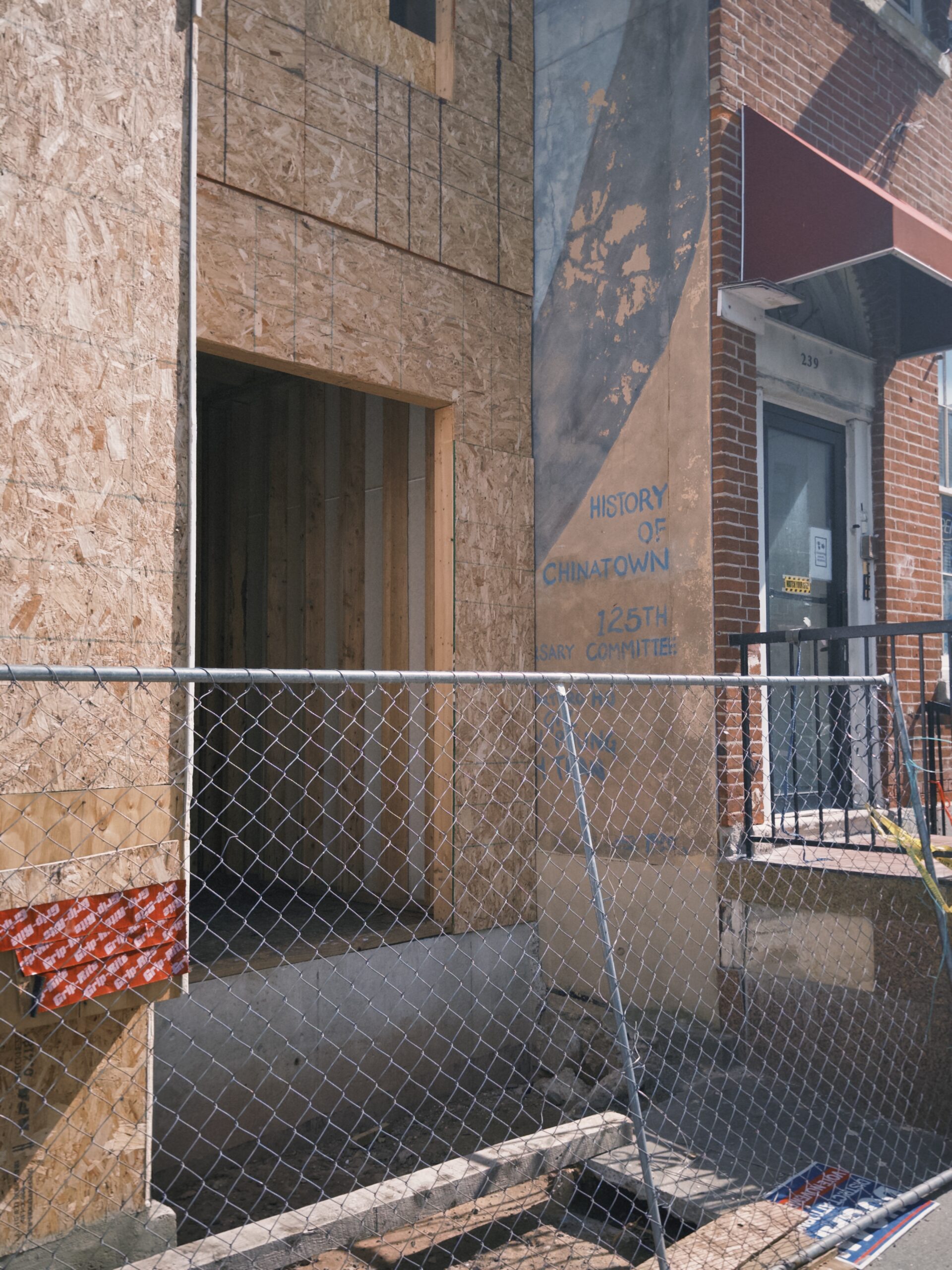
Image Credit: Beika Lyu
- In December of 1979, Philadelphia and Tianjin formed the tie of “sister-cities”, and have kept a trans-pacific friendship since then. ↩︎
