

 Elijah Dillow
 Gongfu Lyu
 Handuo (Leo) Sun
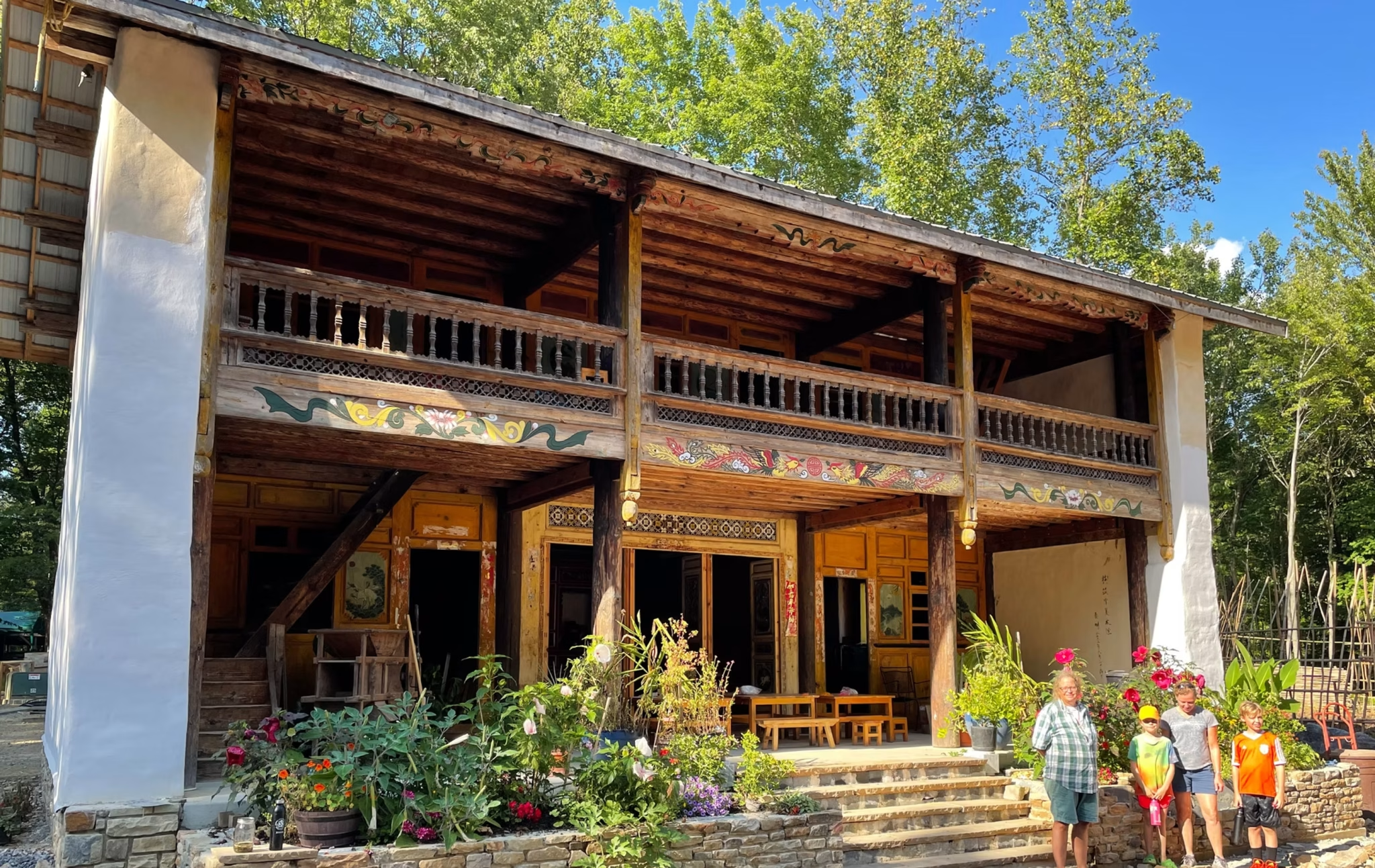
It began with a walk—quiet, unplanned, and unremarkable on the surface. Somewhere in the hills of Jianchuan, Yunnan, John Flower, a U.S.-born scholar, passed by a traditional timber house, unaware that it would come to redefine his relationship with culture, land, and memory. The owner of the house, in a gesture so common in rural China yet so rare in today’s world, invited him in. He learned that the house was soon to be flooded by a hydroelectric project. Most people would have offered sympathy and moved on. But instead, Flower asked a different question: what if we moved this house to the United States?
That question grew into the China Folk House—a full-scale reconstruction of the original home, now standing quietly in the valleys of West Virginia. It wasn’t built by contractors with blueprints, but by hands guided by memory. There was no government backing, no institutional sponsor, no diplomatic agenda. It was an act of grassroots cultural preservation, done simply because it felt right. And that, perhaps, is what gives the house its quiet strength. It was never meant to symbolize “China” in the abstract; it was meant to carry the grain of its walls, the orientation of its courtyards, and the whispered memory of those who once lived in it, into a new and unfamiliar landscape.
The project began with uncertainty. Flower wasn’t sure how it would be received—especially in a part of the U.S. often associated with political conservatism and limited exposure to Chinese culture. But what he discovered surprised him. Locals didn’t see the house as foreign or symbolic. They saw it as real. Tangible. Human. A space built with care. That reception, Flower reflects, holds an essential lesson: when culture is encountered not through ideology but through the material—the wood, the layout, the shape of a courtyard—it stops being a symbol and becomes a relationship.
Much attention was paid to preserving the house’s original Feng Shui orientation. In Jianchuan, the structure rested between river and mountain, following centuries of architectural logic meant to align human life with nature. In West Virginia, Flower and his collaborators searched for similar terrain. This choice wasn’t only aesthetic—it was ecological and philosophical. The house was rebuilt with traditional tools, relying on human labor rather than fossil energy. “Labor-intensive, not energy-intensive,” Flower says, pointing to a mode of building that feels increasingly radical in a world of speed, carbon, and detachment. And interestingly, in Jianchuan today, as reforestation efforts progress, more locals are returning to timber construction—not out of nostalgia, but as part of a sustainable future.
When asked why he remained so committed despite the bureaucratic and logistical obstacles—customs restrictions on wood, legal gray zones, and the physical intensity of the work—Flower’s answer is both humble and profound: for the kids. Not just the American students who now intern at the Folk House and learn about rural China through physical engagement, but also the children in Yunnan, whose families came out to say thank you. The gesture mattered. A house thought to be lost forever was not just preserved—it was transformed into a place of encounter, where stories could cross oceans.
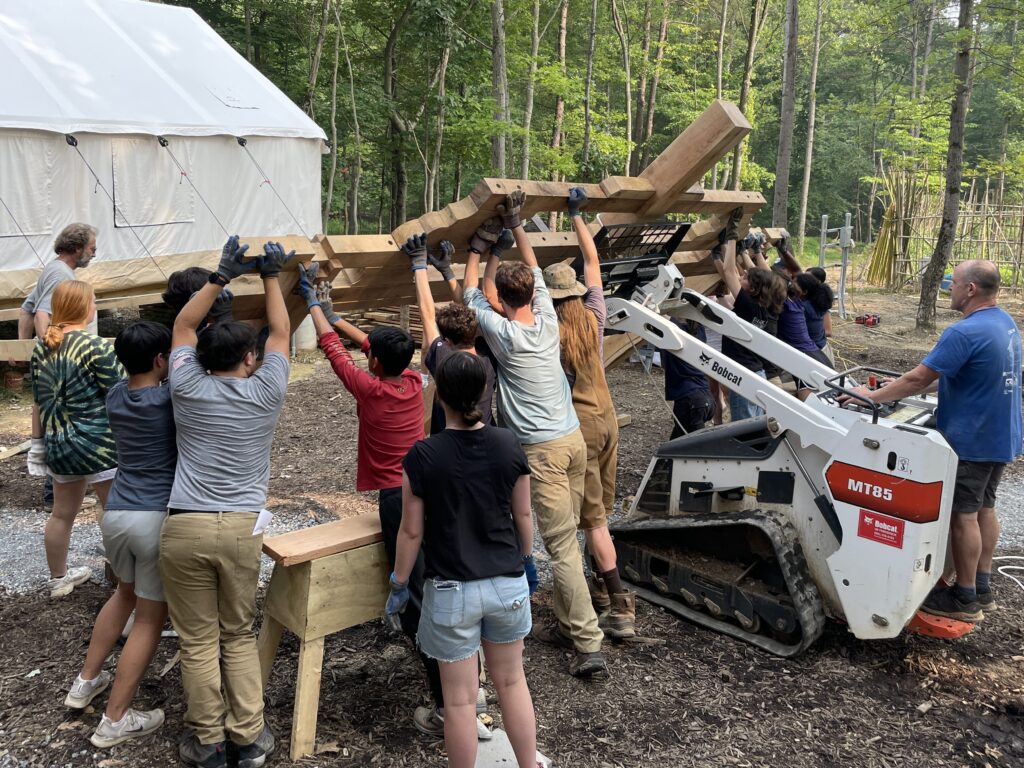
The Reconstruction of the Folk House in West Virginia
What the China Folk House offers is not a museum piece or an exotic backdrop. It offers a glimpse into a different rhythm of life—a daily reality shaped by courtyard rituals, seasonal rhythms, and generational knowledge. In doing so, it challenges dominant narratives in the U.S. that reduce China to skylines, surveillance, or political tension. “There’s another China,” Flower says. “It’s quiet, deeply ecological, and remembers what modernity forgets.”
Looking ahead, Flower hopes to invite villagers from Yunnan to visit the house in West Virginia—not as performers or cultural emissaries, but as people. People who might sit on the porch, share their stories, and be heard. He hopes American students will come not to critique or compare, but simply to understand. In an era of intensified U.S.–China competition, Flower offers no sweeping rhetoric, only a quiet and radical proposition: build something real. Listen with your hands. Sit down with someone unfamiliar. Let culture be something you touch—not just something you read about.
The house stands still, but it moves people. Not with spectacle, but with sincerity. It teaches that the most lasting forms of cross-cultural understanding are not shaped by debate or diplomacy, but by shared work—laying a beam together, walking the land, building something worth keeping.
Visit chinafolkhouse.org to continue following this great preservation project!
“西”游记:一座中国传统老屋与文化保育的跨洋之旅(中文译文)
一切始于一次散步——安静的、偶然的、在表面上毫不起眼。在中国云南剑川的山丘之间,约翰·弗劳尔(John Flower),一位出生于美国的学者,偶然路过一座传统木构老屋,毫不知晓它将重塑他对文化、土地与记忆的理解。这位屋主,像许多中国乡村人那样热情而质朴,在门前将他请了进去。他得知,这座屋子即将因水库工程被淹没。大多数人或许只会表示同情,然后转身离去。但弗劳尔却提出了一个不同的问题:我们能不能把这栋房子搬到美国?
正是这个问题,最终孕育出了“中国民居之家”(China Folk House)——那座老屋被完整拆解、跨洋运输,在西弗吉尼亚的山谷中重新耸立。它不是由建筑公司按图施工建成的,而是由一群人凭借记忆,一块一块地手工重建的。这背后没有政府支持,没有机构资助,也没有任何外交象征,它只是一个民间文化保育行动,源自一种朴素的信念:“这样做,是对的。”也许,正是这种出发点,赋予了这座房子真正的力量。它从未打算抽象地代表“中华文化”,而是实实在在地将那片土地的木纹、院落的朝向、和住在其中的人留下的气息,带入了一个陌生的国度。
项目一开始充满了不确定性。弗劳尔不确定它在美国能否被接受——尤其是在一个政治立场偏保守、对中国文化接触甚少的地方。但他很快发现,现实远比预期温暖:当地人并未将这座房子视为“外来物”或“异域象征”,他们看到的是一个真实、可以触摸的空间,是一个有人情味的家园。这份接纳令弗劳尔深受触动。他说,这其实就是文化交流最根本的启示:当文化不再是抽象观念,而是木头的质地、屋檐的弧线、庭院的走向时,它就不再是符号,而成了一种关系。
在重建过程中,团队十分注重保持原屋的风水格局。在剑川,老屋依山傍水而建,顺应了数百年传统建筑的智慧,力图让人的起居与自然协调共生。到了西弗吉尼亚,弗劳尔和合作者们专门寻找了地势相近的山谷。这个选择不仅是美学上的,也是生态的、哲学的。他们坚持用传统工具复建房屋,以人力而非能源推动。“这是劳力密集型的建造方式,而非能量密集型的。”弗劳尔说。在这个一切追求速度与效率的世界里,这种建筑方式显得几乎是激进的。有趣的是,他指出,如今在剑川,当地人也在重新拾起木构建筑的传统——不是出于怀旧,而是作为一种对可持续未来的回应。
当被问到,在面对层层官僚程序与繁琐运输政策(尤其是木材禁运)、法律灰区与极高的体力消耗时,为什么还要如此执着地推进项目?弗劳尔的回答既朴素又动人:“为了孩子们。”不仅是美国本地的实习生与志愿者——他们如今可以在这座房子里,通过亲手搭建、修缮与研究,学习中国乡村文化;也是为了云南的孩子们——他们的父母特意赶来向团队道谢。这个行动让一座注定被遗忘的老屋,不仅被“保存”了下来,更被“再想象”为一个跨越大洋的相遇之地。
中国民居之家所展现的,并不是中国的异域想象或博物馆里的展品,它呈现的是一种生活的节奏——被庭院仪式、季节流转与代际知识所塑造的日常。而这,正是对当下美国社会中关于中国的主流叙事的温柔抵抗。那些叙事往往将中国简化为城市高楼、数字监控或地缘政治的对象。而弗劳尔说:“中国还有另一面。”那是一种安静的、生态的、记得住老传统的中国。

同学们在休闲时间里享受麻将 (Mahjong) 带来的乐趣
展望未来,弗劳尔希望能邀请云南的村民来到西弗吉尼亚,住进他们旧邻居的屋子,不是以“文化大使”的身份,而是以“真实的人”的身份。他希望美国的学生能来听他们的故事,不是为了评判或比较,而是单纯地去理解。在这个美中关系紧张、竞争加剧的时代,他不提供什么高调的口号,而是发出一个温柔却坚定的邀请:去建造一些真实的事物。用双手去倾听。坐在门廊上,和一个与你不同的人聊聊天。让文化,成为你能触摸到的东西,而不仅仅是你读到的概念。
这座房子如今静静地伫立在西弗吉尼亚的群山之间,却悄然地撼动着人的心。不是靠着壮观的外表,而是靠着一份真诚。它告诉我们,最持久的跨文化理解,并非来自辩论或外交,而是来自一起做事:一同架起横梁,一起走过土地,一起建造值得传承的事物。
请大家访问chinafolkhouse.org并继续关注保护中国传统建筑的公益活动!
